The Perfect Bull Storm: 6 Macros Point to an Imminent Breakout in Bitcoin

Introduction
The world of cryptocurrency is no stranger to volatility, and Bitcoin (BTC), the pioneer of digital assets has been known to make significant moves that capture the attention of investors and analysts alike.
- Inflation Hedge Amid Global Economic Uncertainty: Bitcoin has often been touted as "digital gold" or a store of value. With central banks around the world adopting accommodative monetary policies and concerns over inflation has started to come off in the last 6 months, investors are seeking alternative assets to hedge against the devaluation of traditional currencies. Bitcoin's fixed supply of 21 million coins positions it as an attractive option.
- Institutional Adoption and Growing Acceptance: Major financial institutions, corporations and even countries have started to recognize the value of digital assets. Market participants expect the Bitcoin ETF would be approved by the SEC sooner.
Notable investments by companies such as Morgan Stanley, Citi Group, Fidelity, Standard Chartered, Barclays, BNY, UBS, BNP Paribas, JP Morgan, Goldsman and many more contribute to the growing acceptance of BTC as a legitimate asset class. Rising institutional interest provides a fertile ground for Bitcoin to break-out of the current price range and soar higher.
While individuals engage in on-air discussions about the potential arrival and timing of a Bitcoin ETF, a substantial $2.8 billion has flowed into the cryptocurrency space in just this month. Somebody is voting with their wallet. - Regulatory Clarity and Positive Developments: Regulatory uncertainty has long been a cloud over the crypto space. However, recent developments suggest that clarity is on the horizon. Several countries are working on establishing clear regulatory frameworks for digital assets, providing a more stable environment for investors. Regulatory clarity can attract more institutional participation and encourage broader adoption, potentially unleashing a new wave of investment and driving a breakout in BTC.
- Technological Innovations and Network Upgrades: Bitcoin's underlying technology, the blockchain, continues to evolve. Ongoing network upgrades, improve scalability, privacy, and smart contract capabilities. These enhancements not only make Bitcoin more versatile but also demonstrate the adaptability of the network. As the technology matures, it could attract more developers and users, fostering confidence and potentially leading to a breakout.
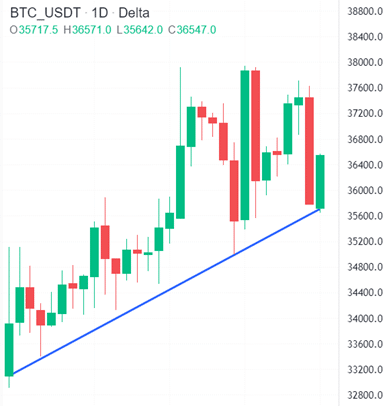
- Market Sentiment and Technical Analysis: Market sentiment and technical analysis play a crucial role in predicting potential price movements. Positive sentiment, reflected in social media chatter, news coverage, and overall market sentiment, are creating a bullish atmosphere. Additionally, on the technical side BTC has formed a bullish ascending triangle structure in the last few weeks, which tends to form ahead of bullish breakouts. A substantial break to the north of $38,000 should open the door to a swift test of the psychologically important $40,000 level.
If a Santa Rally really gets going, traders shouldn’t rule out that Bitcoin could even rally back to its 2022 highs at $48,000 before the end of the year.
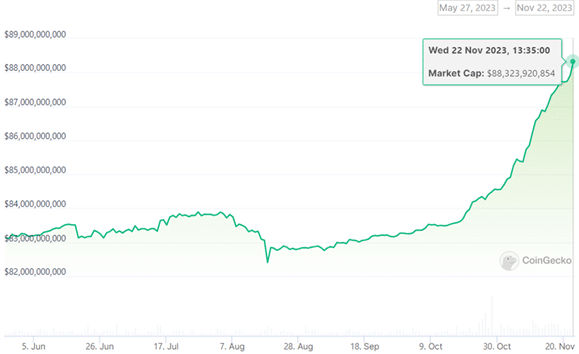
6. USDT Market cap & Historical Behavior of BTC in December: The increase($2.8 billion in November) in Tether’s USDT market capitalization signals a conversion of fiat into stable coins, and it would ultimately be detected as new inflows into crypto. This shows that institutional players that are paramount in facilitating those flows are deploying billions into crypto ahead of any potential ETF launch.
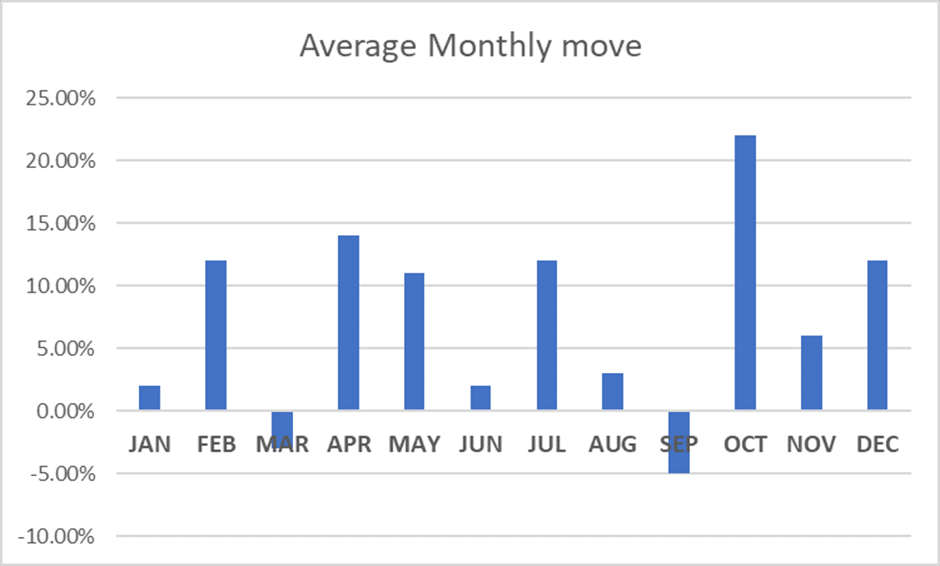
During the last eight years, Bitcoin has gained +12% on average, during the month of December, the market structure also supports another push higher into December.
Conclusion:
As a research analyst specializing in the cryptocurrency sector, it's crucial to acknowledge the interdependence of macroeconomic elements that impact the fluctuations in Bitcoin's value. The intersection of factors such as hedging against inflation, increased institutional involvement, regulatory transparency, technological progress, and favorable market sentiment presents a compelling argument for an upcoming surge in Bitcoin. Despite the inherent unpredictability of the crypto market, staying well-informed about these macroeconomic aspects can offer valuable perspectives for investors navigating the ever-changing terrain of digital assets.
Disclaimer
Delta Exchange or its affiliates does not offer investment advice or endorsements. The information herein is informational and shouldn’t be seen as financial advice. Always do your own research and consult professionals before investing.
Frequently Asked Questions (FAQs)
Q1. What macro factors can drive a Bitcoin breakout?
Answer: Key drivers include Federal Reserve rate policy, spot ETF inflows, post-halving supply reduction, US dollar weakness, geopolitical instability, and stablecoin market cap growth signalling fresh capital entering crypto. Since 2024, institutional ETF flows have overtaken the halving as Bitcoin's dominant price driver.
Q2. How does institutional adoption impact Bitcoin price?
Answer: Institutional adoption adds structural demand and reduces circulating supply through long-term holding. US spot Bitcoin ETFs have accumulated over 600,000 BTC in net inflows since their January 2024 launch, with BlackRock's IBIT alone pulling in over $62 billion. ETF daily flows now regularly exceed daily Bitcoin mining output by a wide margin.
Q3. Why is Bitcoin considered an inflation hedge?
Answer: Bitcoin has a fixed supply of 21 million coins with programmatic issuance through halvings, which mirrors gold's scarcity argument. The pure inflation-hedge narrative is more complex in practice though. During the 2022 rate hike cycle, Bitcoin sold off alongside equities, and its behaviour across different macro regimes continues to evolve.
Q4. How do regulations influence Bitcoin market trends?
Answer: Favorable regulation unlocks institutional capital and participation. The SEC approved US spot Bitcoin ETFs in January 2024, MiCA came fully into force across the EU in December 2024, and the US GENIUS Act passed in July 2025. Each of these removed specific legal barriers that had kept institutional money on the sideline.
Q5. What role does market sentiment play in Bitcoin price movements?
Answer: Sentiment drives short-to-medium-term price action meaningfully. Fear and Greed Index extremes tend to precede reversals. Retail FOMO accelerates parabolic moves while capitulation marks bottoms. On Delta Exchange, real-time data on funding rates, long/short ratio, and open interest help traders quantify where sentiment stands rather than guessing.
Q6. How does USDT market cap affect Bitcoin liquidity and demand?
Answer: A rising USDT market cap signals fresh fiat entering the crypto ecosystem, capital that eventually rotates into BTC and other assets. Total stablecoin supply crossed $300 billion in 2025. Tracking stablecoin supply growth remains a useful leading indicator of buying pressure building across crypto markets.