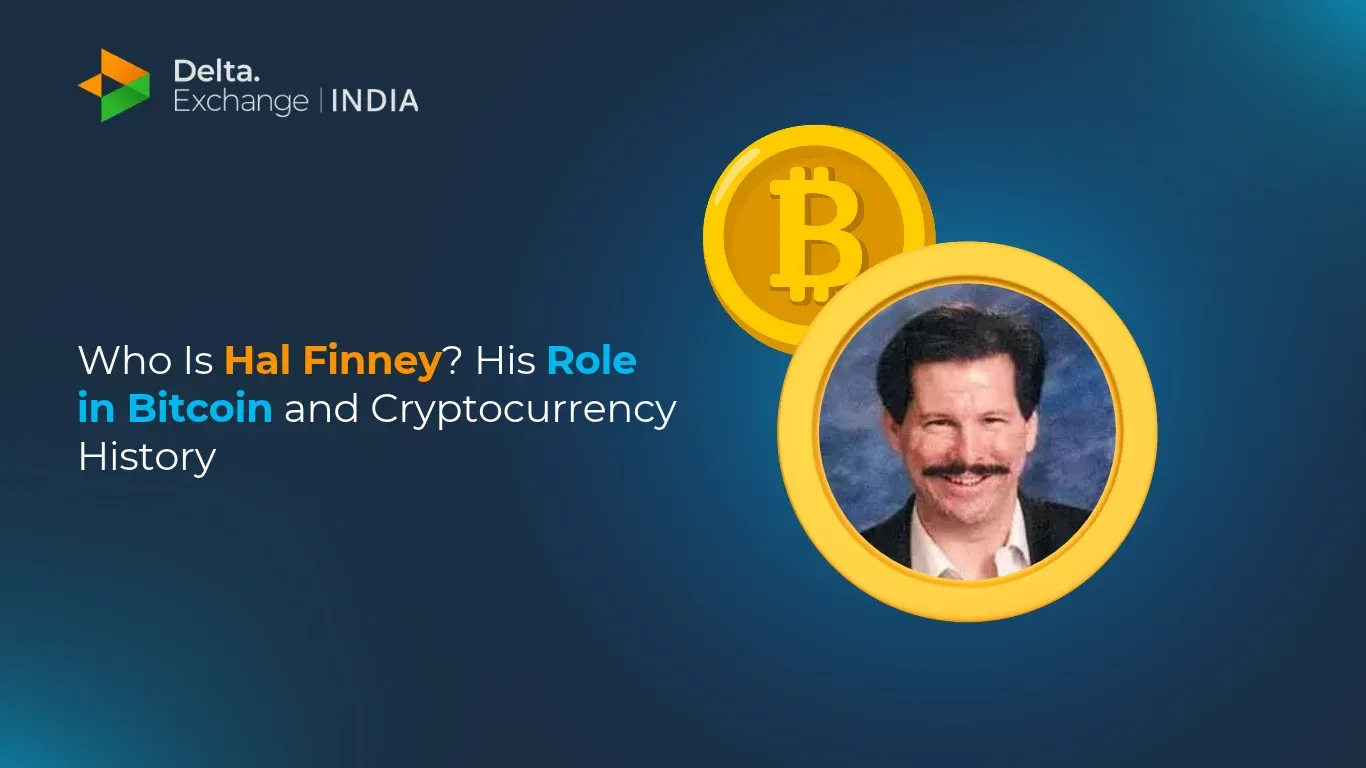
Who Is Hal Finney? His Role in Bitcoin and Cryptocurrency History

Hal Finney is a famous name in the crypto world. And for good reason.
He was an American cryptographer who, by his own account, was the first person after Satoshi Nakamoto to run Bitcoin. In January 2009 he received the first bitcoin transaction between two people: 10 BTC from Satoshi, in block 170. Before that, he spent nearly two decades on privacy tools, including PGP and his own proof-of-work token, RPOW.
People usually know him as Bitcoin's first user. He was also its first bug reporter and one of few veteran cryptographers who took Satoshi seriously.
In this post, I’ll share deeper insights on Hal Finney..
Key Takeaways
- By his own account, Hal Finney was the first person besides Satoshi Nakamoto to run Bitcoin, within days of its January 2009 release.
- He received the first person-to-person bitcoin transaction, 10 BTC, in block 170.
- His "Running bitcoin" tweet is widely described as the first public post about running the software.
- In 2004 he published RPOW (Reusable Proofs of Work), an earlier design for scarce digital tokens.
- He was diagnosed with ALS in 2009 and died on 28 August 2014, aged 58. Alcor cryopreserved his body.
- Whether he was Satoshi is unproven. He denied it but timing evidence from 2009 argues against it.
Hal Finney at a Glance
- Full name: Harold Thomas Finney II
- Born: 4 May 1956, Coalinga, California
- Education: Engineering degree, Caltech, 1979
- Family: Wife Fran, whom he met at Caltech, plus a son and a daughter
- Died: 28 August 2014, Phoenix, Arizona
The Road to Bitcoin: Hal Finney Before 2009
Caltech and the Video Game Years
Finney graduated from Caltech in 1979 and took a job in the young video game industry, at a company behind console titles like Adventures of Tron, Armor Ambush and Space Attack. Bitcoin's first outside tester started out writing code for TV game cartridges… pretty cool actually.
PGP and the Cypherpunks
Cryptography was his real passion. In his 2013 essay "Bitcoin and Me", he wrote that he worked closely with Phil Zimmermann on an early version of PGP (Pretty Good Privacy), the email encryption program. When Zimmermann founded PGP Corporation, Finney was one of the first hires, and he stayed until he retired in early 2011.
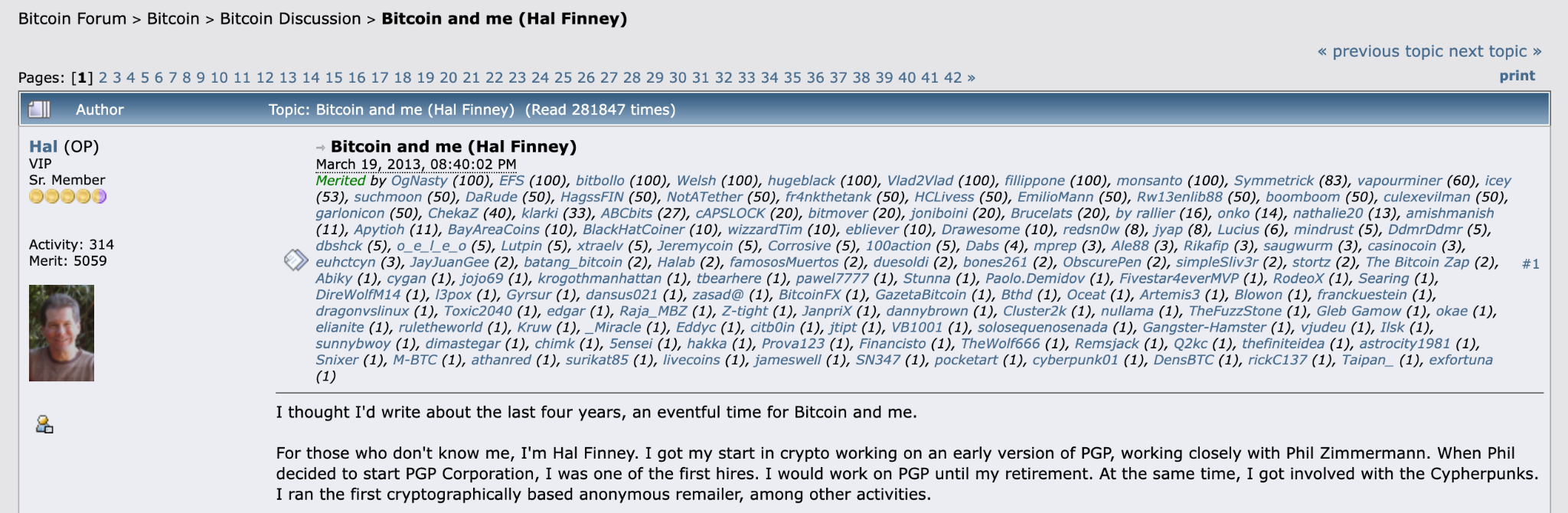
He was also active among the cypherpunks, a mailing-list community that saw strong encryption as a shield for ordinary people against surveillance. Finney ran the first cryptographically based anonymous remailer, which basically let people send email without revealing who they were.
The cypherpunk years gave him three things Bitcoin would later need:
- A view of privacy as a basic right.
- Years of arguments about how digital cash could work.
- Long correspondence with Wei Dai and Nick Szabo, whose ideas fed into Bitcoin.
RPOW: A Rehearsal for Bitcoin
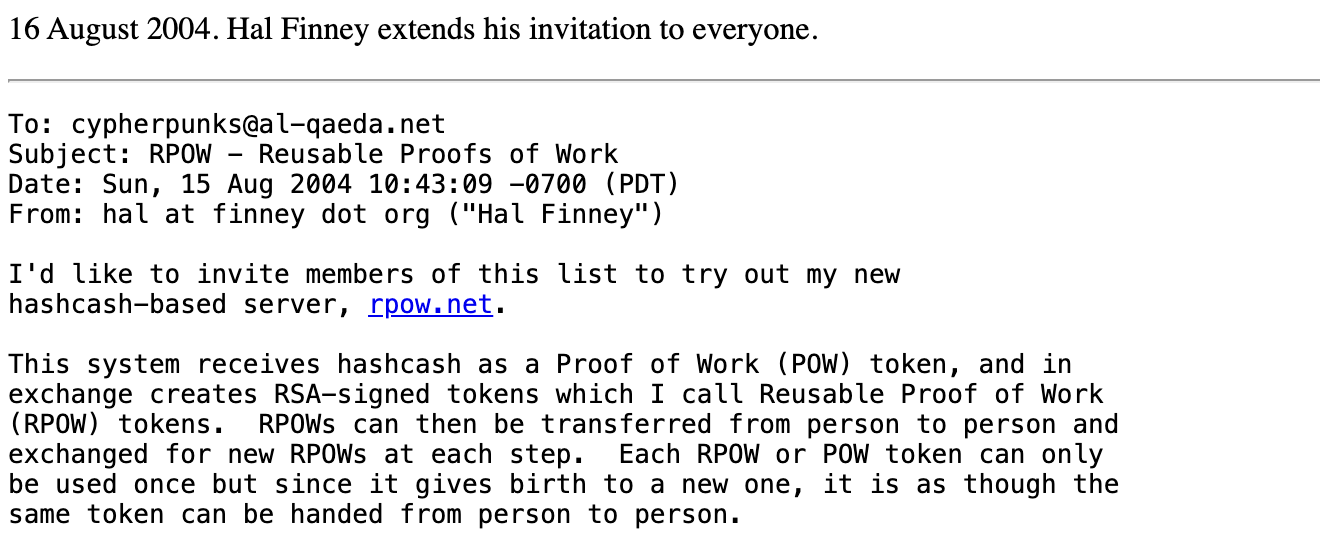
On 15 August 2004, Finney published RPOW, which is short for Reusable Proofs of Work. It took a token that cost computing effort to make and let people pass it on without copying it. To keep the system honest, RPOW ran its server on an IBM secure coprocessor whose software anyone could check remotely. Bitcoin later replaced that single server with a whole network agreeing on one shared record.
In my view, that background explains why Finney understood Bitcoin so quickly. He had already spent years on the same double-spending problem and knew where earlier designs had stalled.
January 2009: The Week Bitcoin Got Its First User
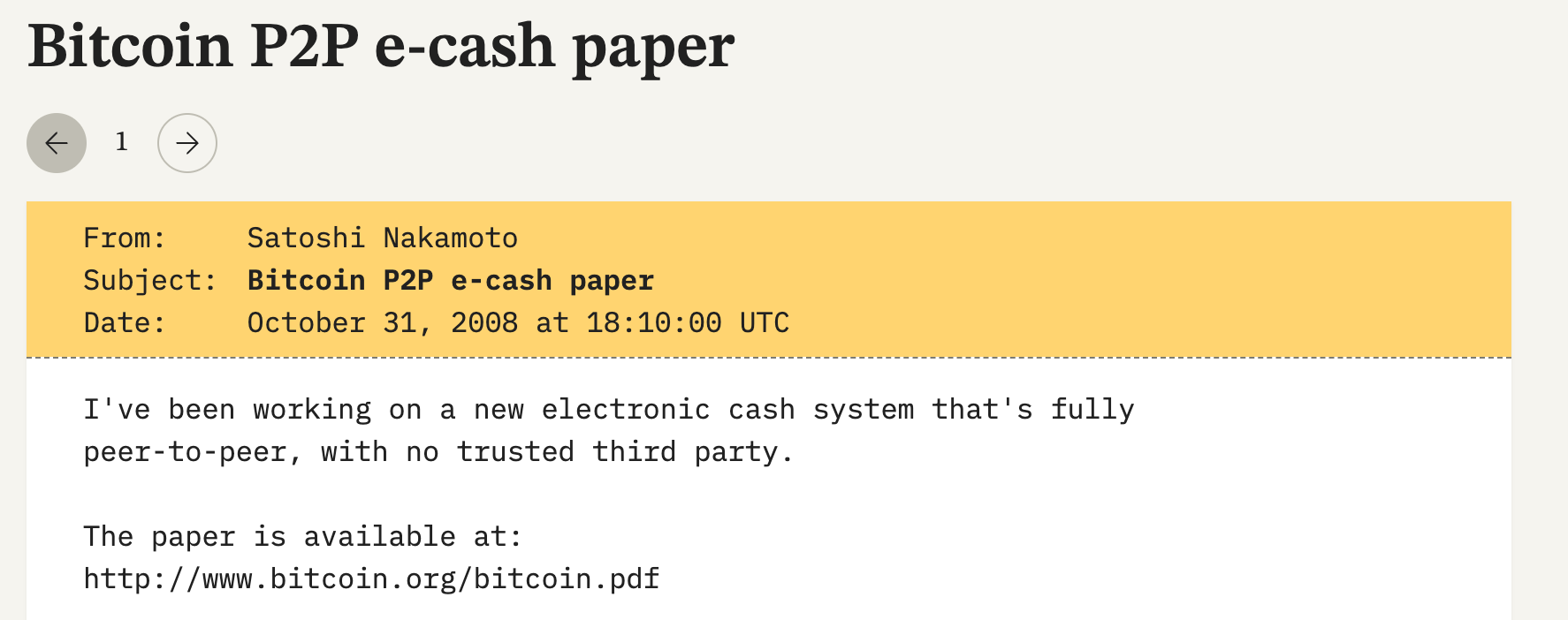
On 31 October 2008, Satoshi emailed the Bitcoin white paper to a cryptography mailing list. Most replies were sceptical. But Finney's reply on 7 November called Bitcoin "a very promising idea" and asked how nodes would check blocks.
"Running bitcoin"
Satoshi announced version 0.1 on 8 January 2009, and Finney had it running almost immediately. In his 2013 essay he hedged slightly, saying he thought he was the first person besides Satoshi to run it. He remembered mining "block 70-something". The Bitcoin Wiki is more exact and credits him with block 78, mined on 9 January.
A day later he tweeted "Running bitcoin." By the way, most accounts date it to 10 January, California time; X shows dates in each reader's time zone, so the post may read 11 January.
The First Bitcoin Transaction: 10 BTC in Block 170
Then Satoshi sent him 10 BTC to check that a transfer between two people would work. It did. The transaction sits in block 170 with a timestamp of 03:30 UTC on 12 January 2009, still the evening of 11 January in California, and anyone can look it up on a block explorer.
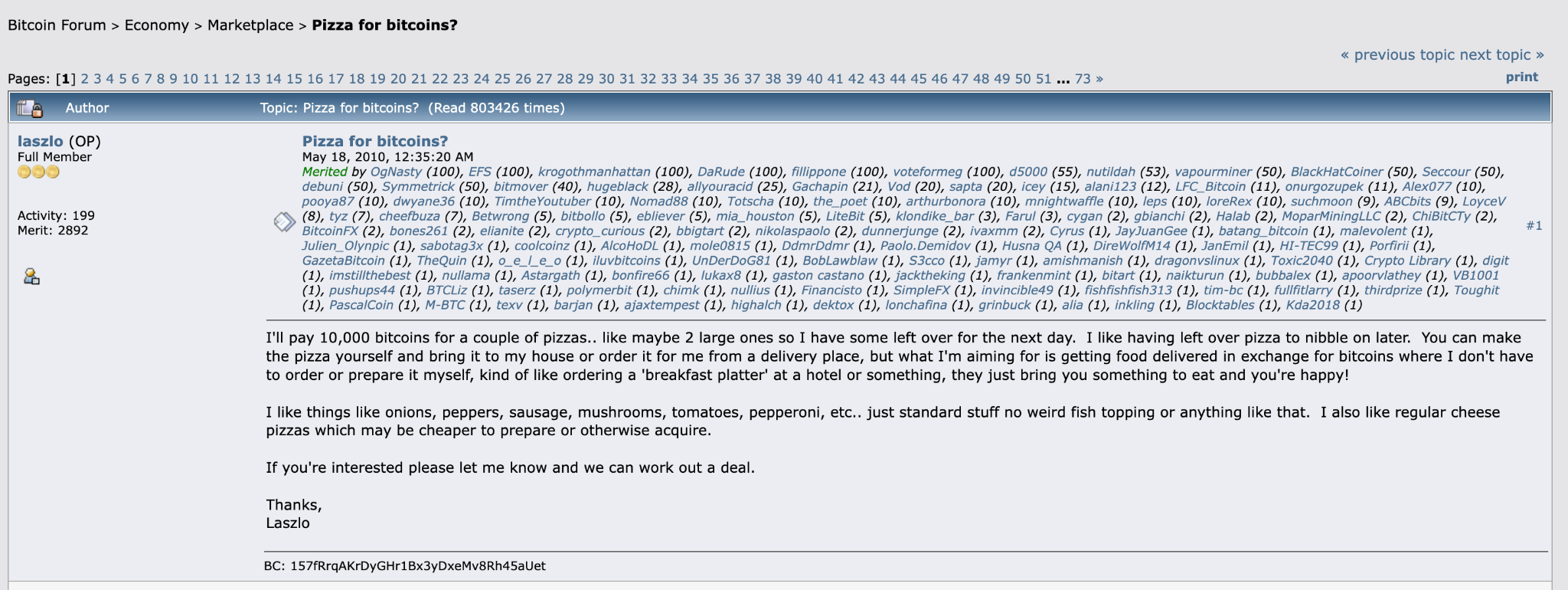
Nothing was bought with it. Bitcoin's first purchase came on 22 May 2010, when programmer Laszlo Hanyecz paid 10,000 BTC for two pizzas.
Bug Hunting in the First Weeks
Over the next few days the two of them traded emails.
Finney found bugs and Satoshi fixed them. Finney later said he imagined Satoshi as a young man of Japanese descent, very smart and sincere.
He mined several more blocks over the following days, then switched the miner off. The computer ran hot and the fan noise annoyed him. Four years later he admitted he wished he had kept it going, though he also called himself extraordinarily lucky to have been there at the start. Personally, I like him more for admitting it.
What Happened to Hal Finney's Bitcoin?
Nobody outside his family knows how much he held, so treat any Hal Finney net worth figure online as a guess. Plus the public record is thin:
- In late 2010, surprised that bitcoin now had a market price, he found his old wallet intact and moved the coins to offline storage for his heirs.
- By March 2013, he wrote, they were in the family's safe deposit box.
- A year later Forbes reported that he had sold most of them, at around $100 each, as his medical bills climbed.
In his last year an extortionist demanded 1,000 BTC from the family, over $400,000 at the time, and phoned in a fake emergency that sent armed police to their house, Wired had reported. Finney, almost fully paralyzed by then, waited on the lawn while officers searched. So… if you hold crypto, that's a good reason not to tell strangers how much.
Bitcoin Work Through ALS: Hal Finney's Final Years
In August 2009, seven months after Bitcoin launched, Finney was diagnosed with ALS (Lou Gehrig's disease), which kills the nerve cells that control muscles. That October he wrote about it publicly in an essay called "Dying Outside".
Fatigue and a failing voice forced him to retire in early 2011, but he kept working on Bitcoin. Using a commercial eye tracker, he wrote code about 50 times slower than before. His project, suggested by developer Mike Hearn, used processor security features built for "trusted computing" to harden Bitcoin wallets, and in 2013 he said it was almost ready to release.
That March he also posted "Bitcoin and me" on the BitcoinTalk forum, his own account of Bitcoin's first weeks and the main source for much of this article. In it he said he was comfortable with his legacy and that he had always loved crypto, "the mystery and the paradox of it."
He died in Phoenix, Arizona, on 28 August 2014, aged 58, and the Alcor Life Extension Foundation cryopreserved his body, as he had arranged.
Was Hal Finney Satoshi Nakamoto? The Evidence and Claims
Two investigations in April 2026 put this question back in the news.
Why some people think he was Nakamoto
He had the skills, and he had already built a digital cash system in RPOW. Plus, he was also the first person on the network after Satoshi and the first to receive a transaction. Two other details keep the theory alive:
- From 1982, for about nine years, he lived in Temple City, California, less than two miles from the family home of Dorian Satoshi Nakamoto, the man Newsweek named as Bitcoin's creator in March 2014. Dorian denied it though.
- In 2014 Forbes had the writing-analysis firm Juola & Associates compare Finney with Satoshi. It rated him its best candidate yet, but Satoshi's emails to Finney matched the white paper more closely than Finney's writing.
Why the evidence points the other way
Finney categorically denied it. The strongest evidence comes from Jameson Lopp, co-founder of the custody firm Casa, who published it in October 2023:
- On 18 April 2009, Finney ran a 10-mile race in Santa Barbara starting at 8 a.m. Satoshi emailed developer Mike Hearn at 9:16 a.m., about two minutes before Finney crossed the line.
- ALS had cut Finney's typing from 120 words a minute to a finger peck, yet Satoshi made 4 code check-ins and 17 forum posts in August 2010.
The block 170 transfer proves nothing either way, since anyone can send coins to a second wallet they control.
What changed in 2026
On 8 April, a New York Times investigation by John Carreyrou named British cryptographer Adam Back as the likeliest Satoshi. Back has denied it.
Two weeks later the documentary ‘Finding Satoshi’, led by writer William D. Cohan and investigator Tyler Maroney, argued that Satoshi was two people: Finney writing the code and the late cryptographer Len Sassaman writing the prose. A two-person team would get around Lopp's timing evidence. Fran Finney says in the film that her husband probably played some role in creating Bitcoin.
But neither investigation produced cryptographic proof, such as a message signed with Satoshi's keys.
My read is that Finney probably wasn't Satoshi, and I don't think the answer should change how he's remembered.
Hal Finney's Legacy in 2026
Fran Finney still leads the Running Bitcoin Challenge, an annual fundraiser where people run, walk, hike or roll 21.1 km, Hal's favourite distance, for ALS research.
His name is also on the Human Rights Foundation's Finney Freedom Prize, created in 2024. The family sent its award to the ALS Network, which used it to launch the Hal Finney ALS/MND Research Fund.
The rest is harder to see.
Wrapping Up
Finney spent his working life on privacy software, saw something in Bitcoin that most of his peers missed, and received its first person-to-person transaction. He helped stabilize the network with bug reports when it had almost no users, and kept writing code after ALS had taken his voice and most of his movement.
Bitcoin went from a test transfer between two people to a global market that traders now reach easily through cryptocurrency exchanges like Delta Exchange India. Whoever Satoshi turns out to be, Finney's own record explains why his two-word tweet still gets quoted every January.
Frequently Asked Questions
- Who is Hal Finney?
Answer: Hal Finney was an American cryptographer and programmer, born in 1956, who worked on PGP and became Bitcoin's first user after Satoshi Nakamoto. He died of ALS in 2014.
- What was the first bitcoin transaction?
Answer: Satoshi Nakamoto sent 10 BTC to Hal Finney as a test in January 2009. It was recorded in block 170 and was the first transfer between two people.
- How much bitcoin did Hal Finney own?
Answer: Nobody knows. He mined for only a few days, kept his coins offline, and Forbes reported that he later sold most of them to pay medical bills.
- Was Hal Finney Satoshi Nakamoto?
Answer: It's unproven, and he denied it. A 2023 timeline analysis argues against it, while the 2026 documentary Finding Satoshi claims he co-created Bitcoin with Len Sassaman.
- What is the Running Bitcoin Challenge?
Answer: It's an annual fundraiser led by Fran Finney. Participants cover a half marathon distance in January to raise money for ALS research in Hal's memory.