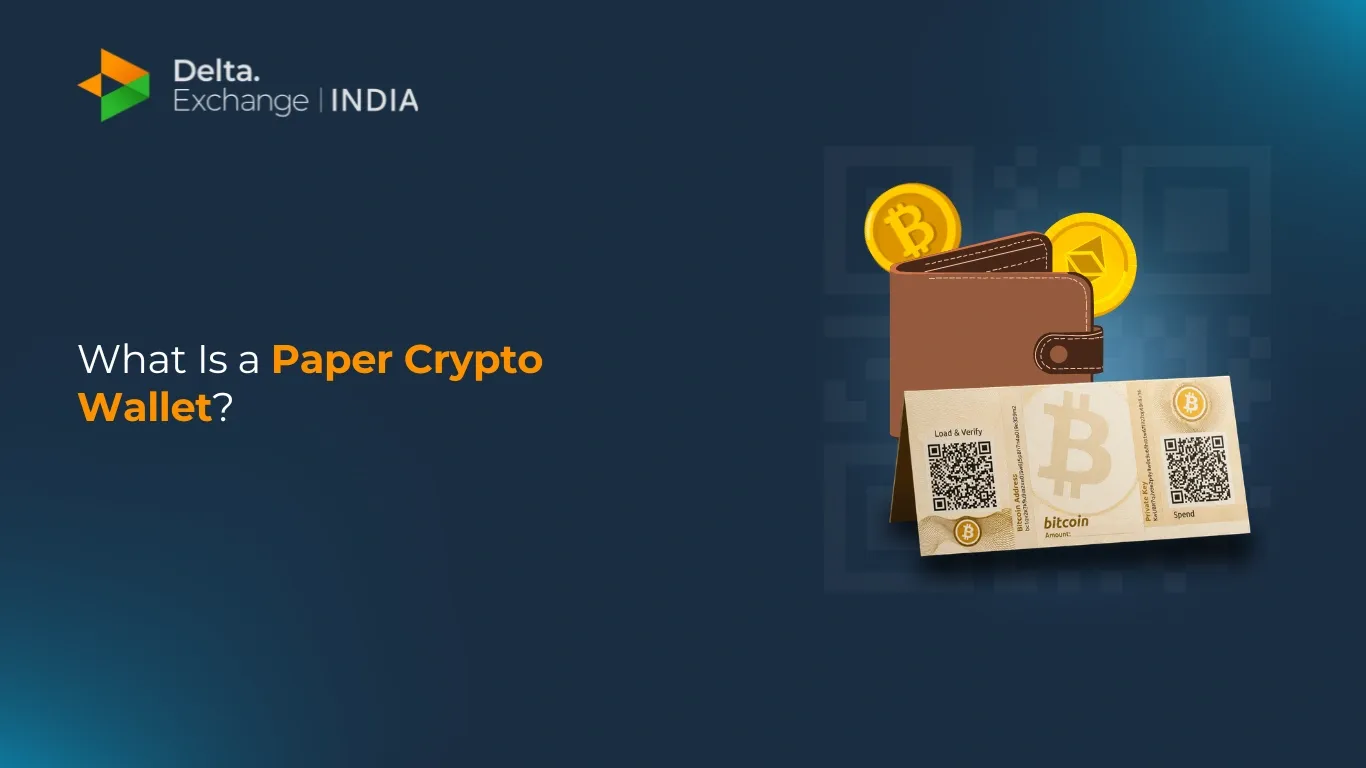
What Is a Paper Crypto Wallet?

Owning crypto comes with a kind of responsibility most of us don’t fully appreciate until something goes wrong. There’s no bank to call if you forget a password, and no helpline that can “reset” access to your coins. Everything comes down to a set of keys, and how carefully you store those keys decides how safe your funds actually are.
Over the years, people have tried all kinds of storage methods - some digital, some entirely offline. One of the oldest offline methods, and one that still comes up in conversations today, is the paper crypto wallet.
In this post, we’ll walk you through everything you need to know about a paper crypto wallet: what it is, how it works in practice, and whether it still makes sense to use one now.
Key Takeaways
- A paper crypto wallet is a physical printout containing your public address and private key. It basically counts as cold storage. That means it has no internet connectivity and stays out of reach of remote hackers.
- Your crypto does not sit on the paper. It lives on the blockchain, and the paper just holds the keys that unlock it.
- The private key is the one piece of information that matters most; whoever has it, controls the funds.
- Physical risks like fire, water damage, or simply misplacing the document are a bigger worry here than any cyber threat.
- A lot of users today lean toward hardware wallets or secure trading platforms, keeping paper wallets mainly for long-term, tuck-it-away storage.
The Two Keys That Make a Wallet Work
There’s two user components behind every crypto wallet, paper or otherwise.
Your public key - which works like a receiving address, like a bank account number. You can hand it out freely, and anyone can use it to send you crypto - so not too different from sharing your bank account number with someone.
Then there’s your private key - which is what actually authorises spending. It’s proof of ownership, and it’s what allows funds to move. Unlike a bank PIN, there’s no “forgot password” option here. If it's lost, it's lost for good.
A wallet, in any form, is really just a way of holding onto this key pair. A paper wallet stores it on paper. A software wallet stores it inside an app. A hardware wallet stores it on a dedicated device. Same idea, different container.
What is a Paper Wallet? A Quick Overview
A paper wallet is a printed document holding a cryptocurrency’s public address and private key, usually with QR codes thrown in for quicker scanning later. It’s created using a wallet-generation tool, and once it’s transferred onto paper, it exists entirely outside of any digital network.
Since there’s no internet connection involved anywhere in this, a paper wallet falls under what people call “cold storage.”
That term simply means the keys are kept away from anything connected to the internet, which removes exposure to a whole category of online threats - phishing attempts, malware, exchange breaches, you name it.
To be clear - your crypto isn’t exactly sitting on that paper. The blockchain always holds the actual record of what you own. So the paper only holds the keys needed to prove that ownership and move the funds when you’re ready.
Why Some People Still Prefer This Kind of Storage
Not everyone wants their crypto in an app that’s connected to the internet around the clock. Paper wallets appeal to a fairly specific type of user. And it’s easy to see why:
- There’s zero exposure to remote attacks, since the wallet is never online in the first place. So there’s no login for anyone to guess or compromise.
- There’s barely any cost involved. Generating and printing a wallet costs next to nothing compared to buying a dedicated hardware device.
- Plus, there’s no dependency on tech at all. No software to update, no firmware, no battery to charge. The wallet exists for as long as the paper does.
The catch, obviously, is that all this offline security shifts the entire burden onto you as the person physically holding that piece of paper.
Weighing the Security: What’s Strong, What’s Fragile
On the digital side, paper wallets are about as solid as it gets. There’s no server, no database, no online account for anyone to break into. As long as your paper wallet private key was generated on a clean, offline device to begin with, there's essentially nothing for a hacker to target.
On the physical side, though - there’s undeniable risk. Any emergency - a fire, a flood, a drawer that gets cleared out during spring cleaning, or just forgetting where you kept it - any of these can mean permanent, irreversible loss. Whoever ends up holding that paper, whether on purpose or by accident, effectively holds the crypto.
This is really the whole trade-off behind paper wallet cryptocurrency: you remove one category of risk almost entirely (cyber) while taking on full responsibility for another (physical).
How a Paper Wallet Stacks Up Against Other Options
Here's a quick comparison against the other common storage methods out there:
There’s no single “best” answer here - it boils down to how often you plan to touch your funds.
If you’re actively trading, having a platform manage the security side of things makes life a lot easier, which is one reason many active users on cryptocurrency trading platforms like Delta Exchange India don’t have to think about private keys at all during their day-to-day trading. If you’re setting funds aside for years without touching them, cold storage starts to make a lot more sense.
Creating a Paper Wallet: What the Process Looks Like
- Pick a wallet-generation tool you trust: Open-source tools are usually the safer bet since anyone can inspect the code and confirm nothing shady is happening behind the scenes.
- Take your device offline first: Before generating anything, disconnect from Wi-Fi and mobile data entirely.
- Let the generator create your keys: It produces a public address and private key pair, usually shown as text alongside matching QR codes for easy scanning.
- Print it on a trusted printer: Ideally one that isn’t hooked up to a shared network or cloud printing service, since some printers quietly cache documents.
- Store the printout somewhere actually secure: A safe, a locker, or something equivalent - somewhere it’s protected from both accidental damage and anyone who shouldn’t have access to it.
Getting Your Funds Back Out
Spending crypto that’s sitting in a paper wallet means moving the private key into an online wallet app that supports importing, or “sweeping,” keys.
The process usually goes like this: you pick a compatible wallet, open its import or sweep option, and either scan the QR code or type the private key in manually. Once it’s imported, the app checks the blockchain and shows you the available balance.
The moment your paper wallet private key touches an internet-connected device, the wallet stops being “cold”. It’s exposed now. The safest move at that point is to send the entire balance to a brand-new address you control, rather than leaving anything behind on the now-exposed wallet. Once that transfer is done, treat the original paper wallet as retired. Don’t go back to it, don’t deposit into it again.
A Few Habits That Help
A handful of small habits go a long way in reducing the risks tied to paper wallet cryptocurrency:
- Protect the physical document itself: Laminate it or slide it into a moisture-resistant sleeve so it survives wear and tear.
- Keep more than one copy, in more than one location: A locker at home and one elsewhere, for instance, so a single bad event doesn't wipe everything out.
- Never create a digital trace of it: No photos or cloud backups. The second it exists as a digital file, the whole offline advantage disappears.
Does This Kind of Storage Still Hold Up Today?
Paper wallets were far more common in Bitcoin’s early years, mostly because hardware wallets didn’t exist yet as an alternative. They’re still functional, and a niche group of long-term holders still uses them, but hardware wallets have largely taken over that role because they offer similar offline protection without the fragility that comes with paper.
That said, if you understand the risks going in and you’re genuinely disciplined about how you store it, a paper wallet remains a legitimate, low-cost way to keep crypto completely away from online threats.
The Bottomline
So a paper crypto wallet is basically just a printed pair of keys - a public address to receive funds and a private key to control them. Its offline nature makes it immune to remote hacking, but that same trait puts the entire burden of safekeeping on whoever’s holding the paper. There’s no institution to fall back on if it’s lost, damaged, or stolen.
For long-term, hands-off storage, that trade-off can genuinely make sense. But if you’d rather have a bit more convenience and some built-in security infrastructure handling things for you, options like hardware wallets or a well-secured trading platform tend to be the more practical fit for everyday use.
FAQs
- Is a paper wallet the same thing as cold storage?
Answer: Pretty much, yes. Any storage method that keeps private keys completely away from the internet, paper wallets included, falls under the umbrella of cold storage.
- Can a lost private key ever be regenerated?
Answer: No, and this trips people up quite often. Private keys can’t be recreated or recovered once they’re gone, which is exactly why keeping backups in separate locations matters so much.
- Can I withdraw just part of the funds from a paper wallet?
Answer: Technically you can, but I wouldn’t recommend it. Once the private key touches an online device, the entire wallet should be treated as exposed, so pulling out the full balance is the safer call.
- Does a paper wallet work for every cryptocurrency?
Answer: Not automatically. It depends on the specific blockchain and the generation tool you’re using. So it’s worth double-checking compatibility with your particular coin before creating one.
- Would a hardware wallet be a better choice than paper?
Answer: For most people, yes. Hardware wallets give you similar offline protection while cutting down on physical risks like fire or water damage, and they usually come with easier recovery options if the device itself is lost.