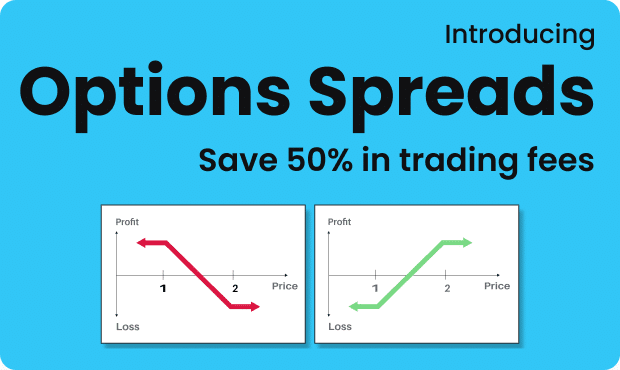
Trader’s Guide to Options Spreads at Delta Exchange

Options spreads are a popular options strategy that entail simultaneously going long and short two call (or put) options of the same expiry date. Typically, two different trades are required for a spread trade which results in higher trading fees and slippages. We at Delta Exchange have come up with innovative contracts which allow you to directly trade option spreads.
What are option spreads?
While there are many options spreads available, this article will focus on the types of vertical spreads.
Call Vertical spreads -
Call Vertical Spreads consist of the same number of Call options of the same underlying asset with a different strike price but same expiration date.
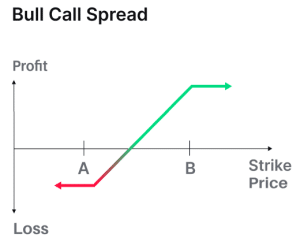
Bull Call Spreads -
Go long with a call option for a strike price above the current market price and pay the premium. Simultaneously, short a call option at a higher strike price that has the same expiration date as the first call option and collect the premium (Net debit).
Deploy this if you believe the asset will rise in value just enough to justify exercising the long call but not enough to where the short call can be exercised.
Bear Call Spreads -
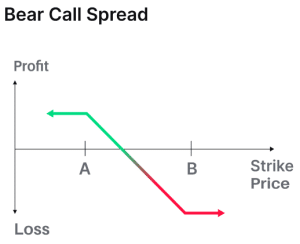
Go long with a call option for a strike price below the current market price and pay the premium. Simultaneously, short a call option at a lower strike price that has the same expiration date as the first call option and collect the premium (Net credit).
Deploy this if you believe the asset will fall in value just enough to justify exercising the short call but not enough to where the long call can be exercised.
Put Vertical spreads: Put Vertical Spreads consist of the same number of Put options of the same underlying asset with a different strike price but same expiration date.
Bull Put Spreads -
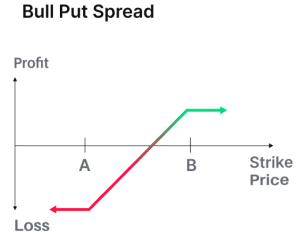
Go long with a put option for a strike price below the current market price and pay the premium. Simultaneously, short a put option at a higher strike price than the current market price that has the same expiration date as the first put option and collect the premium (Net credit).
Deploy this if you believe the asset will rise in value above the higher strike price to justify exercising the short put but not enough to where the long put can be exercised.
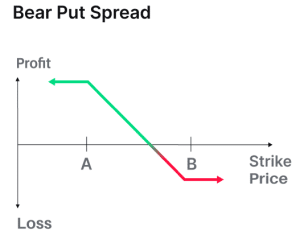
Bear Put Spreads -
Go long with a put option for a strike price above the current market price and pay the premium. Simultaneously, short a put option at a lower strike price than the current market price that has the same expiration date as the first put option and collect the premium (Net debit).
Deploy this if you believe the asset will fall in value just enough to justify exercising the short put but not enough to where the long put can be exercised.
Options Spreads vs. Naked Selling of Options
- Options spreads offer a defined risk profile, which can provide traders with better risk management capabilities. By combining long and short options positions, the potential profit and loss are limited within a specific range of underlying asset prices.
- Naked options, on the other hand, have an undefined risk profile, meaning potential losses can be significant if the market moves against the position.
- Options spreads typically have lower margin requirements compared to naked options. Since options spreads involve both buying and selling options contracts simultaneously, the risk is partially offset, reducing the margin needed to hold the position.
Options Spreads contracts on Delta Exchange
Contract symbology with an example.“PS-BTC-30000-29500-210723”PS here denotes PUT Spread contract. Another possibility is CS which means CALL Spread. BTC here denotes the underlying asset for the contract.30000 - First Strike Price 29500 - Second Strike Price210723 - Expiry date of the Spread contract in dd mm yy format.
- If you buy a ‘PS’ contract, this means you are deploying Bear Put Spreads (long on first strike, short on second strike)
- If you sell a ‘PS’ contract, this means you are deploying Bull Put Spreads (short on first strike, long on second strike)
- If you buy a ‘CS’ contract, this means you are deploying Bull Call Spreads (long on first strike, short on second strike)
- If you sell a ‘CS’ contract, this means you are deploying Bear Call Spreads (short on first strike, long on second strike)
Options Spreads contracts are launched with strike prices that range between 2%-5% of the underlying asset price. These contracts mature on daily, weekly, biweekly and monthly basis and expire at 12pm UTC on the expiry day. You can start trading these contracts from here.
Why should you trade options spread contracts
- Save 50% on Trading Fees:
When it comes to Options Spreads, you can save up to 50% on trading fees compared to trading single options contracts. In the case of options spreads, trading fees are charged only on one leg of the trade, whereas trading single options would incur fees on both legs. This reduction in fees can significantly enhance your profitability, allowing you to keep more of your gains.
- Enjoy 50% Reduction in Bid/Ask Spread Costs:
Bid/ask spreads can eat into your profits, especially when trading options. However, with Options Spreads contracts, you can benefit from a 50% reduction in bid/ask spread costs. When executing an options spread trade, you only need to cross the bid/ask spread once, as opposed to trading single options where you would pay the spread twice. This reduction in spread costs can make a substantial difference in your overall trading expenses and increase your potential returns.
- Get 300x Leverage:
One of the most enticing aspects of Options Spreads contracts is the ability to trade with significant leverage. With options spreads, you can amplify your trading power up to 300 times. This means you can trade more with less capital, as the margin required will never exceed the maximum potential loss. This increased leverage opens up opportunities to take larger positions and potentially generate higher returns.
- Better Risk Profile:
Understanding and managing risk is crucial for every trader. Options Spreads contracts provide a more favourable risk profile compared to standalone options. When trading Options Spreads, the maximum potential loss is known in advance, giving you better control over your risk exposure. This knowledge enables you to take larger positions without taking undue risks, as you can precisely assess the potential impact on your portfolio.
FAQs
Q1: What are options spreads in trading?
Answer: An options spread means buying and selling two options on the same asset simultaneously. This combination defines your maximum profit and loss upfront, helping reduce directional bet costs or generate income with capped risk.
Q2: What are the main types of options spreads?
Answer: Key types include bull call spreads (bullish), bear put spreads (bearish), iron condors (neutral/sideways), and calendar spreads (different expiries). Delta Exchange offers call and put spreads directly on BTC and ETH with daily, weekly and monthly expiries.
Q3: Why are options spreads considered safer than naked options?
Answer: Spreads cap your losses - either the net premium paid or strike difference minus premium received. Naked options expose you to losing your full premium or, worse, unlimited losses as a seller. Spreads trade some upside for predictable risk.
Q4: What are the benefits of trading options spreads on Delta Exchange?
Answer: Delta Exchange offers spreads as single instruments, slashing transaction costs by over 50%. You get leverage up to 300x, lower margin requirements, a simplified strategy builder, and USDT-settled BTC and ETH spreads across daily, weekly and monthly expiries.
Q5: When should traders use options spread strategies?
Answer: Use bull call spreads when mildly bullish, bear put spreads when mildly bearish, and iron condors during low-volatility sideways markets. Calendar spreads suit elevated near-term IV. Generally, spreads shine when outright options feel expensive for the expected move.
Q6: How does leverage work in options spreads?
Answer: Spread contracts on Delta Exchange require far less margin than two separate legs, delivering leverage up to 300x on the same capital. Profits and losses remain capped by the spread structure, so leverage amplifies returns within defined, predictable boundaries.