Gold Price Crash: Why Is Gold Falling and Can It Recover?

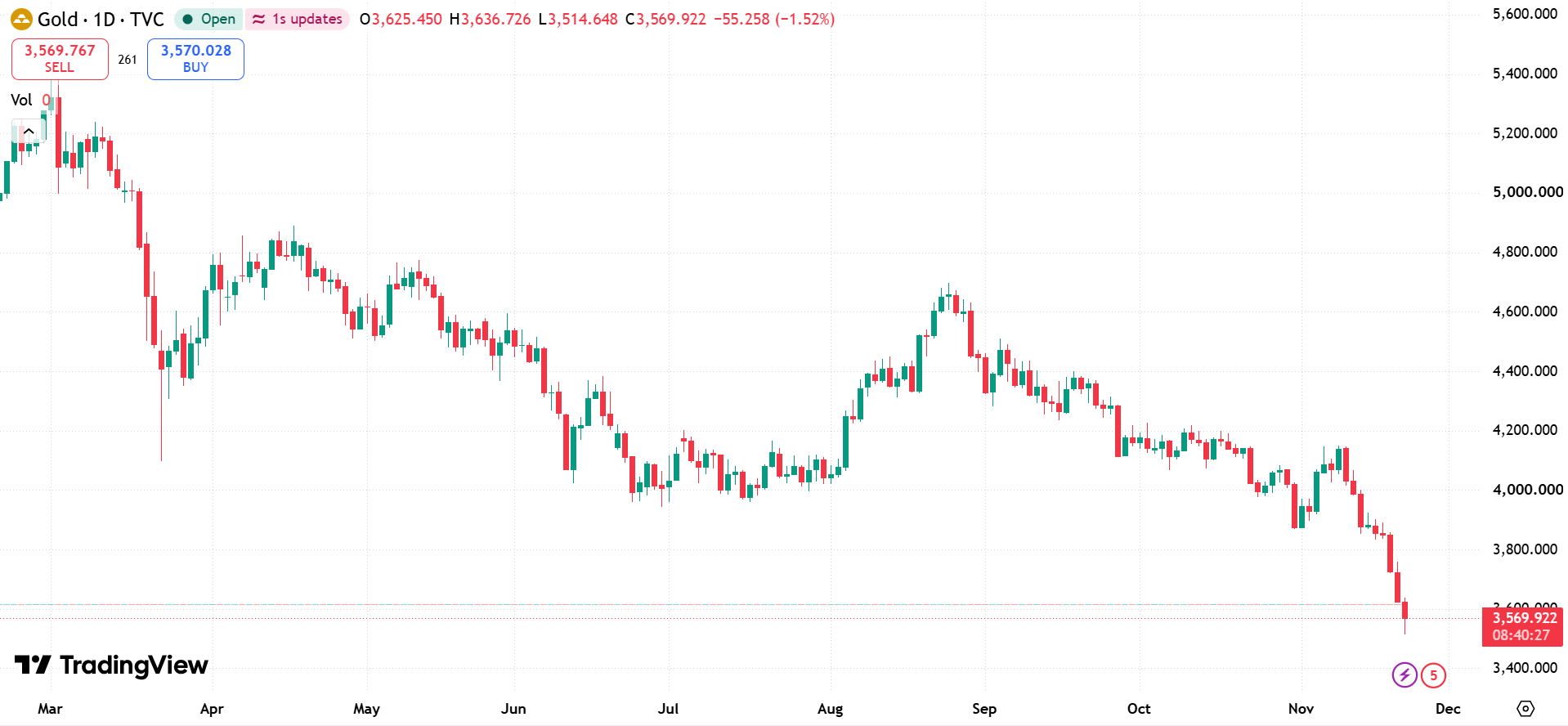
Gold has come under heavy selling pressure after its strong rally earlier this year. The fall is linked to rising US interest-rate expectations, a stronger dollar and selling across global markets. This has raised concerns about why gold price is going down and whether the recent gold price crash could continue.
The recent fall has also come at a time when investors are dealing with a major shift in the technology sector, including Anthropic’s record-breaking IPO. Market participants are closely tracking the gold price today to understand whether the decline is a temporary correction or a sign of a deeper trend reversal.
Why Is Gold Price Going Down?
Expectations of Higher US Interest Rates
Markets are now expecting the Federal Reserve to increase interest rates in December. Recent comments from Fed officials suggest that inflation is still a concern.
Higher interest rates make gold less attractive because it does not pay interest. Investors may prefer bonds and other investments that offer regular returns.
Stronger US Dollar
The US dollar has strengthened in recent sessions. Since gold is priced in dollars, a stronger dollar makes it more expensive for buyers using other currencies. This can reduce demand for gold.
Rising Bond Yields
US bond yields have remained high as markets prepare for a possible rate increase. When yields rise, some investors move money away from gold and towards investments that offer interest.
Selling Pressure Linked to the AI Market and Anthropic IPO
The recent fall in gold has also coincided with heavy selling in technology and AI stocks.
Anthropic’s record-breaking IPO attracted huge investor interest. However, its strong market debut did not stop the wider sell-off in technology stocks. As some investors faced losses in other parts of their portfolios, they sold gold to raise cash and cover those losses.
There may also be some movement of money towards new investment opportunities such as the Anthropic IPO, but there is no clear evidence that gold was directly sold on a large scale to fund IPO investments.
Can Gold Recover?
Gold could recover if expectations of another Fed rate increase start reducing. A weaker US dollar and falling bond yields would also support prices.
Continued buying by central banks, demand for gold ETFs and fresh geopolitical tensions could bring investors back towards gold.
Investors following the gold price chart should watch these factors to identify whether buying momentum is returning and whether gold can recover from its recent losses.
What Does History Tell Us About Gold Price Corrections?
Gold has seen sharp falls even during long-term bullish periods. Historical corrections analysis shows that temporary declines do not necessarily signal the end of a broader bullish trend.
- 2011–2015: Gold fell sharply as the US dollar strengthened and expectations of higher interest rates increased. It later recovered and reached new highs.
- 2020: Gold fell during the initial COVID market crash as investors rushed to raise cash. It recovered strongly after central banks cut interest rates and governments introduced large support programmes.
- 2022: Gold remained under pressure as the US dollar strengthened and the Fed increased interest rates. Central bank buying later helped support the market.
These examples show that a sharp fall does not always mean the long-term trend is over. The recovery depends on interest rates, the dollar and demand from investors.
What Should Traders Watch?
The Federal Reserve’s December decision will be important for gold. If inflation remains high and the Fed signals another rate increase, gold could remain under pressure.
Traders in India should also monitor the gold price in India, as domestic gold prices can be influenced by international gold movements, currency fluctuations and local market factors.
If rate expectations cool, the dollar weakens and bond yields fall, gold could recover.
Gold’s short-term trend has weakened, but its longer-term outlook will depend on how interest rates, central bank buying and global demand develop. Traders should watch these factors before expecting a sustained recovery.
Economic Events to Watch
The next few US economic reports will be important for gold because they can change expectations about the Fed's interest-rate decision.
Disclaimer: Commodity and derivatives markets are volatile and involve a high level of risk. This article is for informational purposes only and does not constitute financial, investment or trading advice. Price predictions are based on current data and may change. Readers should conduct their own research and consider their risk tolerance before making any decisions.