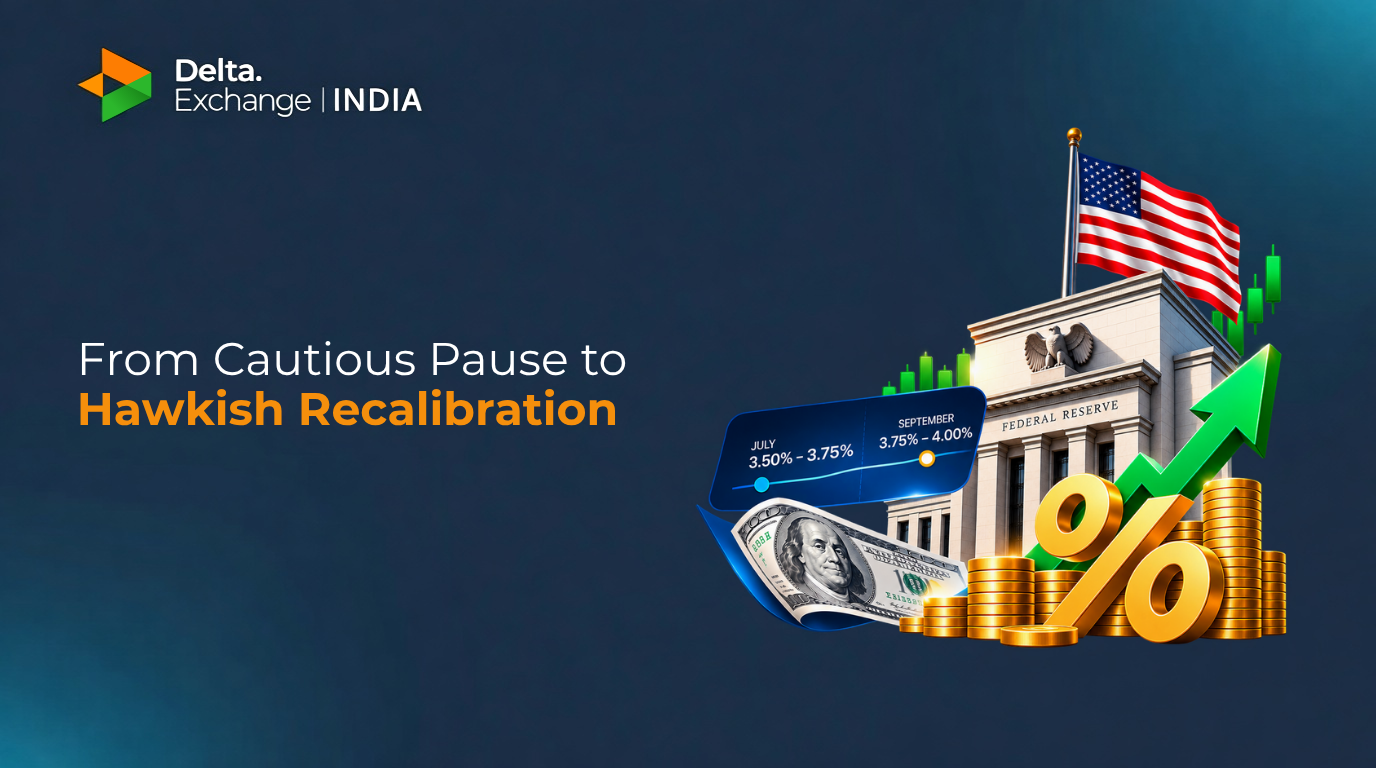
From Cautious Pause to hawkish recalibration

Between the July 29 and September 16, 2026 FOMC meetings, the Fed shifted from a cautious, wait-and-see approach to a more hawkish stance under Chair Kevin Warsh.
July: Cautious Pause
In July, the FOMC kept the federal funds target range at 3.50%–3.75% in a 9–3 vote.
Inflation was still elevated, but the Fed chose to wait for more evidence before tightening further. Financial conditions had also tightened, particularly through the Treasury market, giving the Fed some room to stay patient.
The message was simple: inflation remained a concern, but there was no urgency to act immediately.
September: From Patience to Action
By September, the tone had changed.
Inflation had not improved enough to give the Fed confidence that it was returning to the 2% target at the required pace. At the same time, economic activity remained resilient.
Warsh also reassessed financial conditions, saying he was “hard-pressed to describe broad financial conditions as restrictive.”
The FOMC responded with a 25 bp hike, taking the target range to 3.75%–4.00%. The decision was unanimous, compared with the divided vote in July.
The SEP Shows the Shift
The change was also visible in the Fed's projections:
The message from the projections was fairly clear: growth was holding up, the labour market looked healthier, but inflation was proving more persistent than expected.
The median year-end policy-rate projection also rose from 3.8% to 4.1%, reinforcing the higher-for-longer message.
A More Hawkish Fed
July: Wait for more evidence.
September: Inflation remains sticky, financial conditions are not restrictive enough, and the economy can withstand another hike.
In short, the Fed moved from a cautious pause to active tightening, with a greater willingness to keep rates higher for longer until inflation is convincingly back on track toward 2%.