What is Dollar Cost Averaging (DCA)? Meaning, Strategy & How It Works

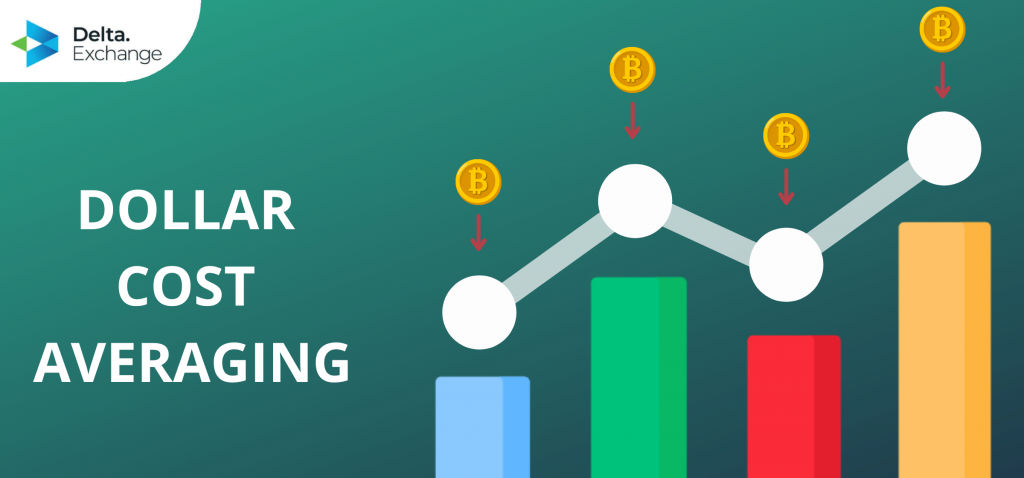
Dollar cost averaging (DCA) is an investment strategy where you split a total investment amount into smaller, fixed sums and invest them at regular intervals - weekly or monthly, for example instead of investing it all at once. Because the amount stays fixed, you automatically buy more units when the price is low and fewer when it is high, which smooths out your average entry price over time and reduces the impact of short-term volatility.
There exist a number of investment strategies which can be used by crypto traders and investors to make better decisions about directing their capital. One of the popular ones is the Dollar Cost Averaging or DCA. It is of significance as it assists in reducing the amount of volatility which comes with investing in assets like cryptocurrencies. The approach isn't new or crypto-specific - the term "dollar cost averaging" was popularised by investor Benjamin Graham in his 1949 book The Intelligent Investor, and it has since become one of the most widely used dollar cost averaging investment strategies across stocks, mutual funds, and now digital assets. A better understanding of DCA will enable investors to make superior decisions with their investments. This article discusses what DCA investing entails, the benefits it provides, how it works step by step, as well as how it compares to some other popular forms of investing.
Key Takeaways
- Dollar cost averaging means investing a fixed amount at regular intervals, regardless of price.
- It lowers your average purchase price over time and removes the pressure of market timing.
- DCA works well for volatile assets like crypto and for investors who prefer a disciplined, passive approach over active market timing.
- DCA does not guarantee profit or protect against loss - it is a risk-management technique, not a guaranteed-return strategy.
What exactly is Dollar Cost Averaging?
Dollar cost averaging (DCA) is the practice of dividing a total sum you want to invest into equal, smaller portions and putting each portion into the market at a set interval - instead of investing the entire amount in one go. DCA investing entails taking up the entire pool of money which has to be invested and separating it into divisions. The strategy involves investing each of these divisions in increments. It is opposed to investing the whole chunk of money at the same time. The investments would be directed into the market at different time intervals. You can either make periodic purchases, or schedule the capital investment for certain time intervals. This strategy prevents fluctuations in the crypto market from having a major effect on the entirety of one’s investment. A lot of times, when a large lump sum is invested into a market, it could be very susceptible to the highs as well as the lows. DCA in crypto specifically, is an effective way of manoeuvring the vagaries of the market. DCA in crypto also prevents investors from directing their capital based on the ‘hype’ around a particular coin. The grounds of investing must solely be market research and ‘emotional investing’ can be prevented. In terms of overall risk mitigation, it is one of the better investment strategies.
DCA Formula
Average Cost per Unit = Total Amount Invested/Total Units Purchased
Because you buy more units when the price dips and fewer when it rises, this average tends to land below a simple average of the prices you invested at.
How Does Dollar Cost Averaging Work? A Step-by-Step Example
Dollar cost averaging works in four steps:
- Decide the total amount: Set the total capital you want to deploy into an asset, for example ₹60,000 over six months.
- Pick an interval: Choose how often you'll invest - daily, weekly, or monthly and stick to it regardless of price moves.
- Invest the fixed amount each cycle: Split the total evenly, for example ₹10,000 a month for six months, and invest that amount every cycle without adjusting for short-term price swings.
- Track the average cost: Because the invested amount is fixed, a lower price buys more units and a higher price buys fewer, pulling the average entry price toward the middle of the range over the investment period, rather than toward whatever the price happened to be on a single day.
What are the benefits of DCA investing in crypto?
It involves periodical investment of capital into the market. Due to the sums of money being introduced at timed intervals, it also decreases the overall average purchase price too. It is a method of investment which proves to be very helpful for someone who has just been introduced to the crypto market and is looking to make some nascent investments. Should one not have tremendous market research backing your investments, DCA would be a safe bet. The strategy calls for avoiding severe losses on the basis of a single investment. It would also help your capital fare better during market crashes. The potential for risk is divided into smaller bits. This also leads to better risk absorption for the capital investments.
In summary, the core benefits are:
- Removes market-timing pressure, you invest on a schedule, not on a prediction.
- Smooths out entry price across a full market cycle rather than locking it to one day.
- Reduces the emotional, hype-driven decisions that hurt inexperienced crypto investors.
- Fits accounts of any size, since each cycle only needs a fraction of the total capital.
- Builds a consistent investing habit, which is often as valuable as the price outcome itself.
What Are the Drawbacks (Pitfalls) of DCA in Crypto?
Some trading platforms might charge transaction fees at every interval of the investment. Another potential setback to this method is that one will miss out on capitalizing on the full expanse of a market high. DCA in crypto also calls for identifying the coin for investing very prudently, as it is a passive investment method. This is pertinent as it could cause you losses if one continues to make steady investments into a badly performing coin. Should the coin invested in, exhibit a state of prolonged decline, it would be detrimental to one’s overall investment portfolio.
- Transaction costs can add up across many smaller trades versus one larger trade.
- Uninvested capital sitting on the sidelines misses out on gains during a rising market.
- DCA still requires picking a fundamentally sound asset, it manages timing risk, not asset-selection risk.
- It requires discipline to keep investing through prolonged downturns, which is psychologically difficult.
Dollar Cost Averaging vs. Lump Sum Investing: Which Is Better?
DCA investing is contrary to another method of investment, the lump sum method. The lump sum method involves investment of the capital all at once instead of dividing it like the DCA method. A drawback to DCA is that one might miss out on encashing on the popularity of when the marker experiences its highs. The lump sum will help you better capitalize on it. What one does gain when investing through DCA in crypto, however, is a level of safety which perhaps will not parallel that offered in the lump sum method. DCA investing also offers the benefit of being easy to comprehend and implement for nascent investors. A study conducted by Vanguard studied the long-term impact of both these investment methods. It concluded that on a short-term basis, DCA investing would help ward off risks. But in a long-term investment plan, the lump sum method fared better.
Conclusively, DCA in crypto is a method which calls for more passive investing than active involvement with the changing market. It is recommended for those that have only recently gained entry into the crypto markets.
Disclaimer: This article is for educational purposes only and does not constitute investment, financial, or trading advice. Dollar cost averaging is a risk-management technique, not a guarantee of profit - cryptocurrency prices are volatile, and trading crypto derivatives carries substantial risk, including the risk of losing your entire invested capital. Please conduct your own research and consult a qualified financial advisor before making investment decisions.
Frequently Asked Question (FAQ)
Q1. What is Dollar Cost Averaging (DCA) and how does it work?
Answer: Dollar Cost Averaging means putting a fixed amount into an asset at regular intervals regardless of price. You automatically buy more when prices are low and less when they are high, lowering your average cost per unit over time.
Q2. What are the benefits of DCA investing in crypto?
Answer: DCA takes the pressure of market timing off the table, cuts emotional decision-making, and smooths out crypto's volatility. It works especially well in bear markets, where regular buys steadily build a position at progressively cheaper prices.
Q3. What are the drawbacks of using the DCA strategy?
Answer: In a strong bull market, investing everything early can beat DCA since all capital gets more time in the market. DCA also incurs more transactions over time, adding costs and demanding consistent discipline to maintain through prolonged downturns.
Q4. How does DCA compare to the lump sum investment method?
Answer: Lump sum investing deploys all capital immediately and outperforms DCA in consistently rising markets roughly two-thirds of the time historically. DCA wins when markets are volatile or declining. On Delta Exchange, both approaches can be applied to crypto derivatives positions.
Q5. Is Dollar Cost Averaging a good strategy for beginner crypto investors?
Answer: DCA suits beginners because it removes the timing decision, builds saving habits, and avoids investing everything at a cycle peak. The 2022 bear market showed how DCA investors built far stronger cost bases than lump-sum buyers who entered at the top.
Q6. How does DCA help reduce the impact of market volatility?
Answer: Spreading purchases across multiple price points means no single bad entry can dramatically hurt overall returns. When prices drop, the same fixed amount buys more units, improving your average cost and amplifying gains when the market eventually recovers.
Q7. When should an investor choose DCA over other investment strategies?
Answer: DCA fits best when entering a volatile asset, during uncertain markets, or when capital arrives periodically. Delta Exchange traders can apply DCA to build derivatives exposure gradually rather than committing all capital to a single leveraged entry.