Selling Call Options – How to Profit?

As an investor, you may have heard about buying call options to speculate on rising crypto prices. At Delta Exchange, we see a lot of interest around that trade. But have you ever considered the alternative approach: selling call options? In this intriguing guide, we will delve into the art of selling call options and explore how it can be a viable strategy to generate consistent returns. By selling call options, you become the seller of the right to buy a specific crypto at a prefixed price within a given timeframe. This unique position can provide you with potential advantages, such as collecting premium income and leveraging market conditions.
What are Call Options, and Types of Call Options
Call options are financial instruments that grant the holder the right, and yet not the obligation, to buy a specific asset, such as a crypto, at a predetermined price within a specified period. As the name suggests, call options give investors the opportunity to "call" or purchase the underlying asset. You can learn more about crypto options and derivatives here - in Delta Exchange’s detailed trading guide. Let's explore the two main types of call options:
- American Call Options: These call options can be exercised at any time before the date of expiry. This flexibility allows investors to capture profits or limit losses based on their assessment of market conditions. With American call options, the potential to profit is not limited by the duration of the contract.
- European Call Options: In contrast to American call options, European call options can only be exercised on the expiration date itself. This limitation means investors cannot take advantage of favorable market movements before the expiration. However, European call options are often priced at a lower premium compared to American options.
Call Options Trading Strategies
Selling call options requires careful consideration of various trading strategies to maximize potential profits and manage risk effectively. Let's explore some popular strategies employed by traders when selling call options:
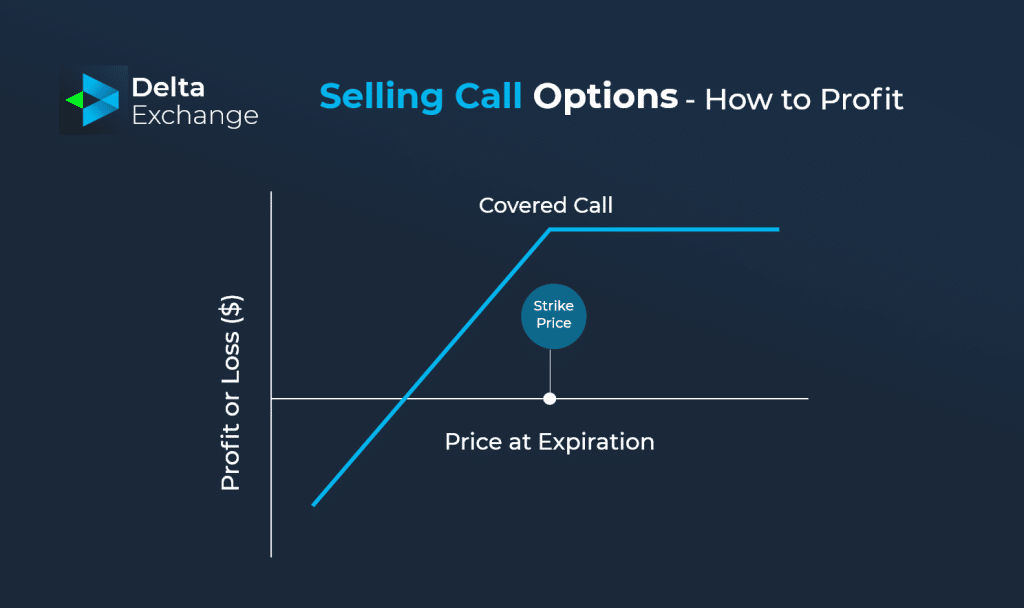
- Covered Call Strategy: This strategy involves selling call options on a crypto that you already own. By selling calls against your existing crypto holdings, you collect premium income while potentially benefiting from capital appreciation. This strategy is often used by investors seeking to generate additional income from their crypto portfolio.
- Naked Call Strategy: The naked call strategy involves selling call options without owning the underlying crypto. Traders employing this strategy believe the crypto price will either remain stagnant or decline, allowing them to keep the premium income received from selling the calls. It's important to note that the naked call strategy carries higher risk as losses can be substantial if the crypto price rises significantly.
- Ratio Call Spread Strategy: This strategy involves selling a higher number of call options while simultaneously buying a smaller number of higher strike price call options. The objective is to profit from a limited upside move in the underlying crypto while partially hedging against potential losses. The ratio call spread strategy allows traders to balance risk and potential reward.
- Call Writing Strategy: In this strategy, traders consistently sell call options on crypto they believe will remain relatively stable or experience minimal price increases. The aim is to collect premium income while not expecting the crypto to reach the strike price and be called away. This strategy can be effective in generating consistent income in low-volatility market conditions.
Thought Process of a Person Selling Call Options
When selling call options, traders go through a thoughtful decision-making process to assess market conditions, evaluate risk-reward profiles, and determine the most suitable options to sell. Here are some key factors that influence the thought process of individuals who sell call options:
- Market Outlook: Traders analyze the current market environment and the outlook for the underlying crypto. They consider factors such as economic indicators, company news, technical analysis, and overall market trends. Understanding the broader market sentiment helps in determining the direction and potential movement of the crypto price.
- Strike Price Selection: Sellers of call options carefully choose the strike price at which they are willing to sell the underlying crypto if it reaches that level. They consider the crypto’s current price, historical price patterns, support and resistance levels, and their own profit targets. Selecting an appropriate strike price is crucial as it determines the premium received and the likelihood of the option being exercised.
- Time Horizon: Traders selling call options assess the time frame in which they expect the crypto to remain below the strike price. They consider factors like upcoming events, earnings announcements, or other catalysts that could impact the crypto’s price movement within the chosen timeframe. The duration of the option contract influences the premium received and the probability of the crypto reaching the strike price.
- Risk Management: Effective risk management is vital for individuals selling call options. They calculate potential losses if the crypto price rises significantly and determine the appropriate risk-reward ratio for each trade. Traders may implement stop-loss orders or exit strategies to limit losses or adjust their positions based on market conditions.
- Premium Income and Profit Targets: Sellers of call options set profit targets based on their desired income goals. They evaluate the premium income received from selling the options and compare it to the potential risks involved. By assessing the risk-reward ratio, they aim to generate consistent income while managing potential losses.
By carefully considering these factors and conducting thorough analysis, individuals selling call options can make informed decisions and execute trades that align with their market outlook and risk tolerance.
Common Pitfalls to Be Wary of
While selling call options can be a profitable strategy, it is essential to be aware of common pitfalls that traders should be cautious about. Understanding these pitfalls can help you navigate the options market more effectively. Here are some key pitfalls to watch out for:
- Unlimited Risk: Selling call options exposes traders to unlimited risk if the crypto price rises significantly. While the premium income received provides a cushion, it may not be sufficient to cover substantial losses. Traders should carefully take stock of their risk tolerance and implement risk management strategies to protect their positions.
- Timing and Market Volatility: Timing plays a crucial role when selling call options. If the crypto price rises rapidly or experiences heightened volatility, it can result in early exercise of the options, leading to missed potential profits. Traders should consider market conditions, upcoming events, and volatility levels when selecting option contracts and strike prices.
- Incorrect Analysis: Accurate analysis of the underlying crypto is essential. Failing to assess the crypto’s fundamentals, technical indicators, and market sentiment can lead to poor decision-making. It's crucial to conduct thorough research and stay updated on relevant news and information related to the crypto.
- Overexposure and Concentration Risk: Selling too many call options on the same crypto or within the same sector can lead to overexposure and concentration risk. If adverse events impact the specific crypto, it can result in significant losses. Diversifying the options portfolio across different crypto and ecosystems can help mitigate this risk.
- Neglecting Assignment Risk: Sellers of call options must be prepared for the possibility of the options being exercised, resulting in the obligation to sell the underlying crypto. Failing to have a plan in place for assignment scenarios can lead to unplanned crypto sales or missed profit opportunities. Traders should be aware of expiration dates and have strategies to manage assignments if they occur.
Selling Call Options through Delta
Now that you’re aware of all the different strategies to look out for and pitfalls to be avoided, you’re ready to start selling call options using our platform. Taking advantage of best-in-market features like basket orders, strategy builder, PnL Analytics among many others, you will always be able to make informed decisions on your position. Selling call options is really simple with Delta! All you need to do is:
- Choose the Call option you’re interested in
- Specify the number of options you’re looking to sell
- Choose if you want it to be a limit order or a market order.
If you’re looking for more information on what the different types of orders mean, you can learn more here.
Final Word
Selling call options can be a lucrative strategy for investors seeking to generate consistent income and maximize returns in the options market. By becoming the seller of call options, traders have the opportunity to collect premium income, leverage market conditions, and manage risk effectively. Selling call options requires careful analysis, market evaluation, and risk assessment. It is crucial to understand the potential risks involved, such as unlimited risk in the event of significant price increases. However, with proper knowledge, strategy implementation, and risk management techniques, selling call options can provide a pathway to consistent income and profit generation.
Frequently Asked Questions (FAQs)
Q1: What are call options in crypto trading?
Answer: A call option gives the buyer the right, but not the obligation, to purchase a crypto asset at a fixed strike price before expiry. Sellers collect a premium upfront and profit when the price stays below the strike. Delta Exchange offers crypto options with INR settlement for straightforward P&L tracking.
Q2: What is the difference between American and European call options?
Answer: American options can be exercised any time before expiry, while European options settle only at expiry. Most crypto options follow the European style, which removes early assignment risk for sellers and makes premium decay more predictable throughout the contract's life.
Q3: What is the covered call strategy?
Answer: A covered call means holding the underlying crypto asset while selling a call option against it to earn premium income. The tradeoff is that your upside gets capped if prices rally past the strike. It suits long-term holders who expect sideways or mildly bullish price action.
Q4: How do traders select the right strike price when selling calls?
Answer: Most sellers target out-of-the-money strikes above the current price, maximising the probability that the option expires worthless. A delta reading between 0.20 and 0.30 is a common benchmark, balancing the premium collected against assignment risk in volatile crypto markets.
Q5: What are the common pitfalls of selling call options?
Answer: The biggest risk is unlimited loss if the market surges past your strike. Crypto sellers also tend to underestimate how fast volatility spikes can erode margin buffers, and often enter positions near market tops when implied volatility is already elevated and premiums look deceptively attractive.
Q6: How does assignment risk affect call option sellers?
Answer: If a call expires on the money, the seller must fulfill the contract. On Delta Exchange, options are cash-settled in INR, so assignment triggers a cash payment rather than physical delivery of the asset. This simplifies the process considerably but does not eliminate the underlying financial exposure.