Can ETH become New Crypto King? – Bitcoin’s Market Dominance Dips

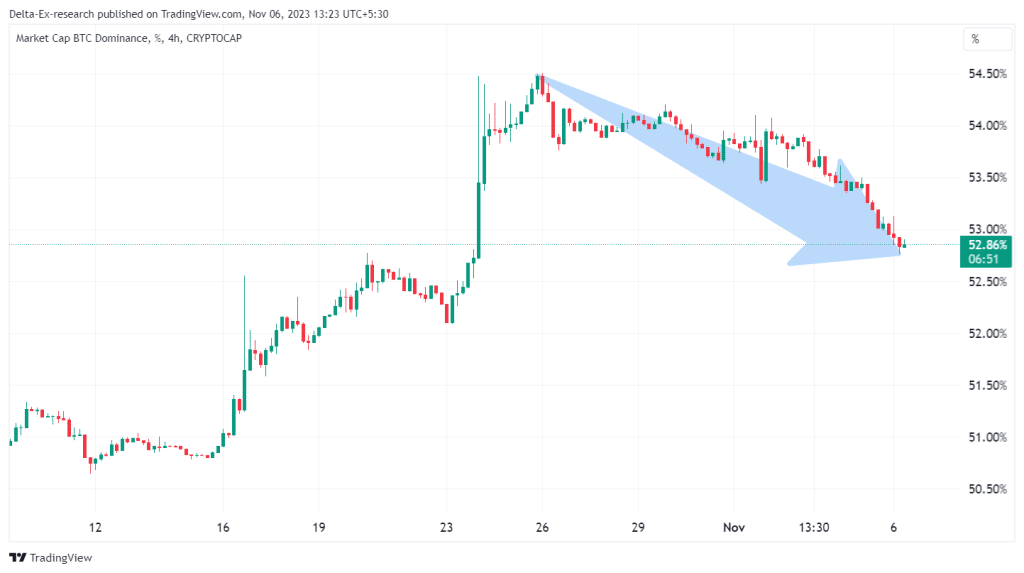
Bitcoin's market dominance which reached its peak at 54.3% before dipping to 52.7%, suggests that traders are embracing additional risk by exploring Ethereum (ETH) and other altcoins.
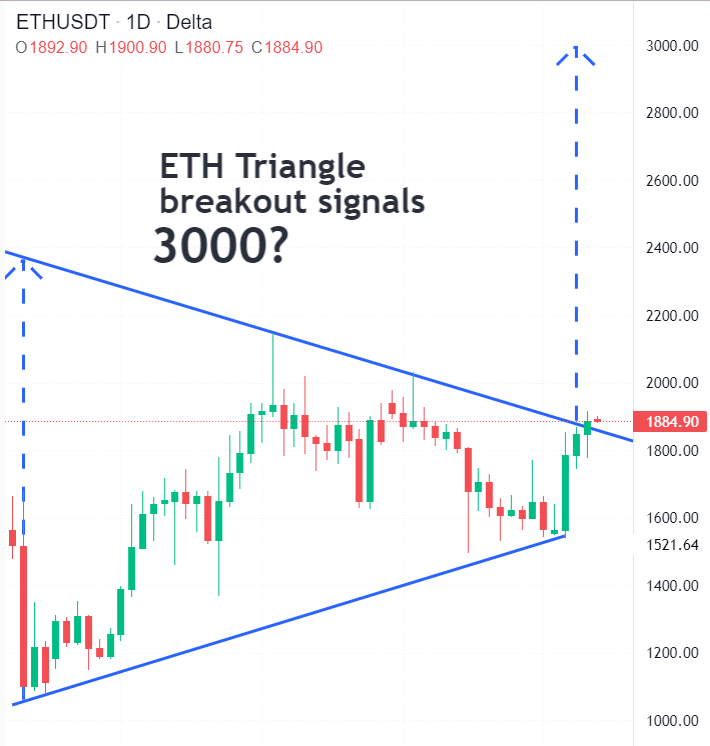
Furthermore, trading volume has diversified, with Bitcoin trading at up to three times the volume of ETH in mid-October, but that ratio has now reduced to just double the volume. Additionally, the perpetual futures funding rate for both Bitcoin and Ethereum is trading at elevated levels, indicating growing interest in undervalued altcoins. The breakout above the 1,740 level is a strong signal, providing a trading opportunity for those looking to take a long position in ETH.
Disclaimer: This report must not be used as a singular basis of any trading decision. Please refer to https://www.delta.exchange/research-disclaimer for analyst disclaimer and other disclosures.
Frequently Asked Questions (FAQs)
Q1: Can Ethereum surpass Bitcoin as the leading cryptocurrency?
Answer: ETH has closed the gap during DeFi and NFT cycles, but Bitcoin dominance strengthened after spot ETF approval in January 2024 and the April 2024 halving. Institutional capital has flowed heavily into BTC products since then, making a sustained flippening unlikely under current market conditions.
Q2: What does Bitcoin dominance indicate in the crypto market?
Answer: Bitcoin dominance measures BTC's share of total crypto market cap. Rising dominance signals capital pulling back from altcoins into Bitcoin during risk-off periods. Falling dominance often signals the start of altseason, as liquidity moves down the market cap ladder toward assets like ETH and L2 tokens.
Q3: Why does a drop in Bitcoin dominance benefit altcoins like Ethereum?
Answer: When BTC.D falls, risk appetite rises and capital rotates into altcoins, with Ethereum typically moving first given its size and liquidity. Since 2024, both BTC and ETH spot ETFs exist, though BTC ETF inflows have been significantly larger, complicating the clean rotation patterns seen in earlier cycles.
Q4: How do trading volume shifts between BTC and ETH reflect market trends?
Answer: Sustained ETH volume growth relative to BTC has historically preceded periods of ETH price outperformance. Post-2024, both assets have spot ETFs, but institutional order flow tilts clearly toward BTC. On Delta Exchange, traders can monitor BTC and ETH volume across perpetuals and options to track these shifts in real time.
Q5: What does the funding rate indicate about market sentiment in crypto?
Answer: Funding rates on perpetual futures show net market positioning. Positive funding means crowded longs and elevated correction risk; persistently negative funding with stable prices can signal a short squeeze. Delta Exchange displays live funding rates for BTC, ETH, and other pairs, giving traders a clean cross-asset sentiment read before entering positions.