Ethereum vs Solana vs Cardano

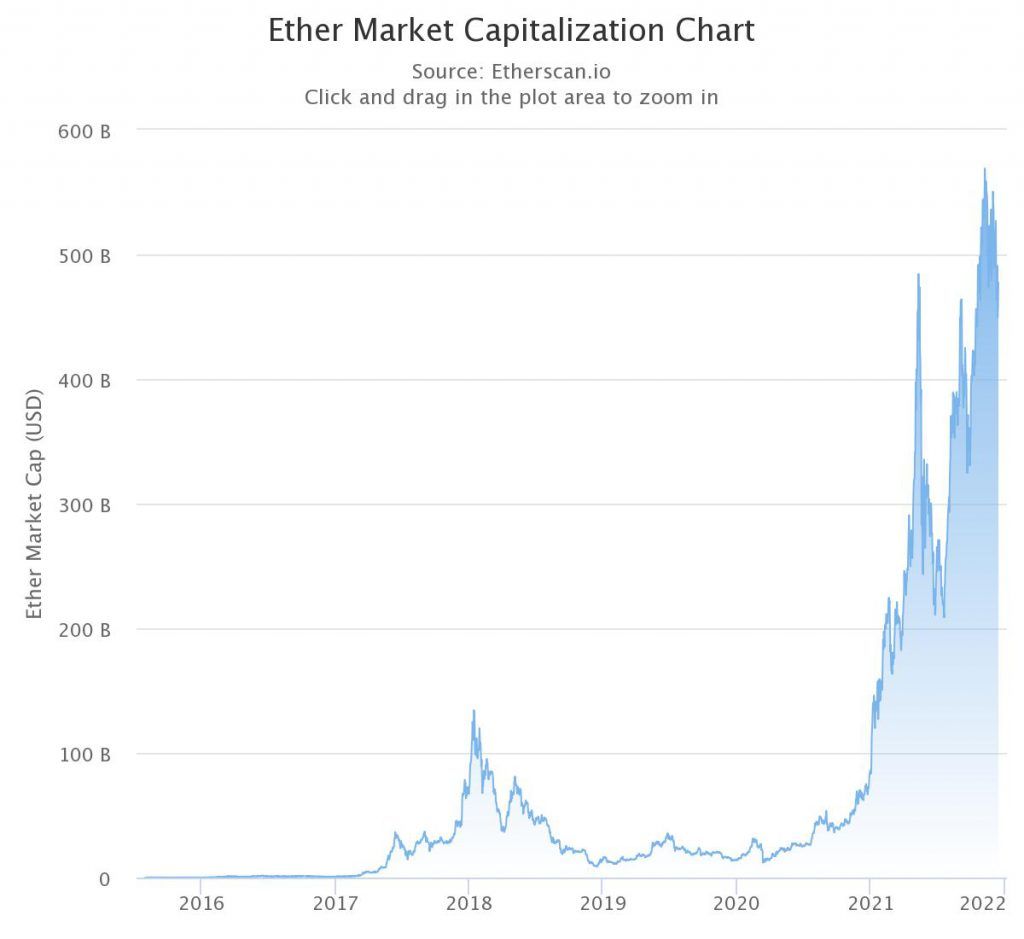
Cryptocurrencies hit a market capitalization of $3 trillion in November 2021 for the first time, as Ether and Bitcoin recorded new highs. Ethereum alone has soared over 500% this year, elevated by the support of decentralized finance (DeFi), non-fungible tokens (NFTs), or smart contracts. The growing demand and prices of Ethereum, which has become the most used blockchain network, have compelled investors to look for alternative options. Other projects have seen this as an opening to enter the market and compete against it. The alternative coins like Solana and Cardano are fast becoming new favorites and have seen a similar growth this year. In this article, we shall look at the data and statistics from around the cryptocurrency markets to find out more about these cryptocurrencies. This has led to a battle between the three cryptocurrencies to decide who will reign over the ‘smart contract’ realm.
Ethereum vs. Solana vs. Cardano
At the center of all cryptocurrencies is the algorithm, which drives them. As a matter of fact, Ethereum, Cardano, and Solana are the names for these blockchain platforms, not the proper cryptocurrencies. These three given cryptocurrencies each have their own tokens that are used for trading. ‘ETH’ is the token used by the Ethereum chain, whereas Cardano and Solana use ‘ADA’ and ‘SOL,’ respectively.
- Ethereum (ETH): Ranked as the world’s second-largest cryptocurrency after bitcoin, Ethereum is a decentralized blockchain network operated by the Ether token which allows users to conduct transactions, trade cryptocurrencies, use and store non-fungible tokens (NFTs), earn interests on their holdings via staking, use social media, and more.
- Solana (SOL): Solana is a decentralized blockchain network built to facilitate scalable, user-friendly apps worldwide, powered by the SOL token. It is the fastest blockchain globally, with a swiftly growing ecosystem, with more than 400 projects spanning over DeFi, Web3, NFTS, etc.
- Cardano (ADA): A third-generation, decentralized blockchain platform, Cardano has been founded on peer-reviewed research and innovated through evidence-based methods. It blends pioneering tech to provide unparalleled scalability, security, and sustainability to decentralized platforms, applications, systems, and societies.
How do Ethereum, Solano, and Cardano fit together?
Smart contracts are one of the primary reasons why the Ethereum, Cardano, and Solana platforms are similar. Another reason is the use (or, as in Ethereum’s case, future use) of a proof-of-stake (PoS) system. Unlike Bitcoin, which is only suited to applications involving the exchange of things, like paying for applications and services, smart contracts open up several possibilities. Such platforms can be utilized towards the building of decentralized apps, which could be decentralized finance (DeFi) applications or a social media platform.
Solana and Cardano: Ethereum-Killers?
The proof-of-stake (PoS) is the primary reason why these two cryptocurrency platforms have been declared Ethereum killers. Though the Ethereum blockchain platform is the largest platform presently, these two platforms are still much more efficient and present the remedy to a problem that plagues many national governments, billionaires, and experts regarding cryptos, i.e., their environmental footprint. However, Ethereum has announced the launch of an upgrade, version 2.0 of its platform next year, which would bring the same system to the platform as well. It intends to cut-down Ethereum’s energy consumption by as much as 99%.Blockchain platforms with smart contracts are expected to gain greater adoption, thus making environmental sustainability a requisite. The crypto market is waiting with bated breath to find out who will emerge victorious among Ethereum, Solana, and Cardano. It is the most exciting battle of the cryptos, besides the Bitcoin vs. Ethereum feud, of course. You can trade Ethereum, trade Solana and even Cardano on Delta Exchange.
Frequently Asked Questions (FAQs)
Q1: What are the differences between Ethereum, Solana, and Cardano?
Answer: Ethereum leads in DeFi TVL and developer activity, running on Proof-of-Stake since The Merge (2022). Solana prioritises high throughput with low fees. Cardano takes a research-first approach with slower but more formally verified ecosystem growth.
Q2: How do smart contracts work across Ethereum, Solana, and Cardano?
Answer: Ethereum uses Solidity via the EVM. Solana runs Rust-based programs in a parallel execution environment for simultaneous processing. Cardano uses Plutus (Haskell) with a UTXO model - strong formal verification, but a steeper developer learning curve.
Q3: Why are Solana and Cardano considered "Ethereum Killers"?
Answer: Both promised faster, cheaper alternatives to Ethereum. That narrative has softened - Ethereum's L2 ecosystem (Arbitrum, Base) now matches their speed, while Solana dominates consumer crypto and Cardano maintains a conservative but academically rigorous DApp ecosystem.
Q4: How does Proof-of-Stake compare across Ethereum, Solana, and Cardano?
Answer: All three now use PoS. Ethereum requires 32 ETH to solo-validate; Solana demands significant hardware; Cardano's Ouroboros allows delegation with no minimum stake, making it the most accessible for retail participants.
Q5: Which blockchain offers the best scalability, security, and sustainability?
Answer: Depends on the use case. Ethereum leads in security and L2 throughput; Solana wins on raw on-chain speed; Cardano on formal guarantees. Traders can access ETH and SOL derivatives with INR settlement on Delta Exchange.